
Spy Week Two: Alan
Spy In The House Of Love Read Along #2

Welcome to A Spy In The House Of Love read-along week #2.
Last week, we were introduced to Sabina through the eyes of the lie detector. This week, we follow her as she moves between her various rendezvous, returning always to the steadfast presence of her husband, Alan.
Through Alan and Sabina's relationship, Anaïs Nin challenges us to consider whether love requires complete honesty or can survive on illusion.
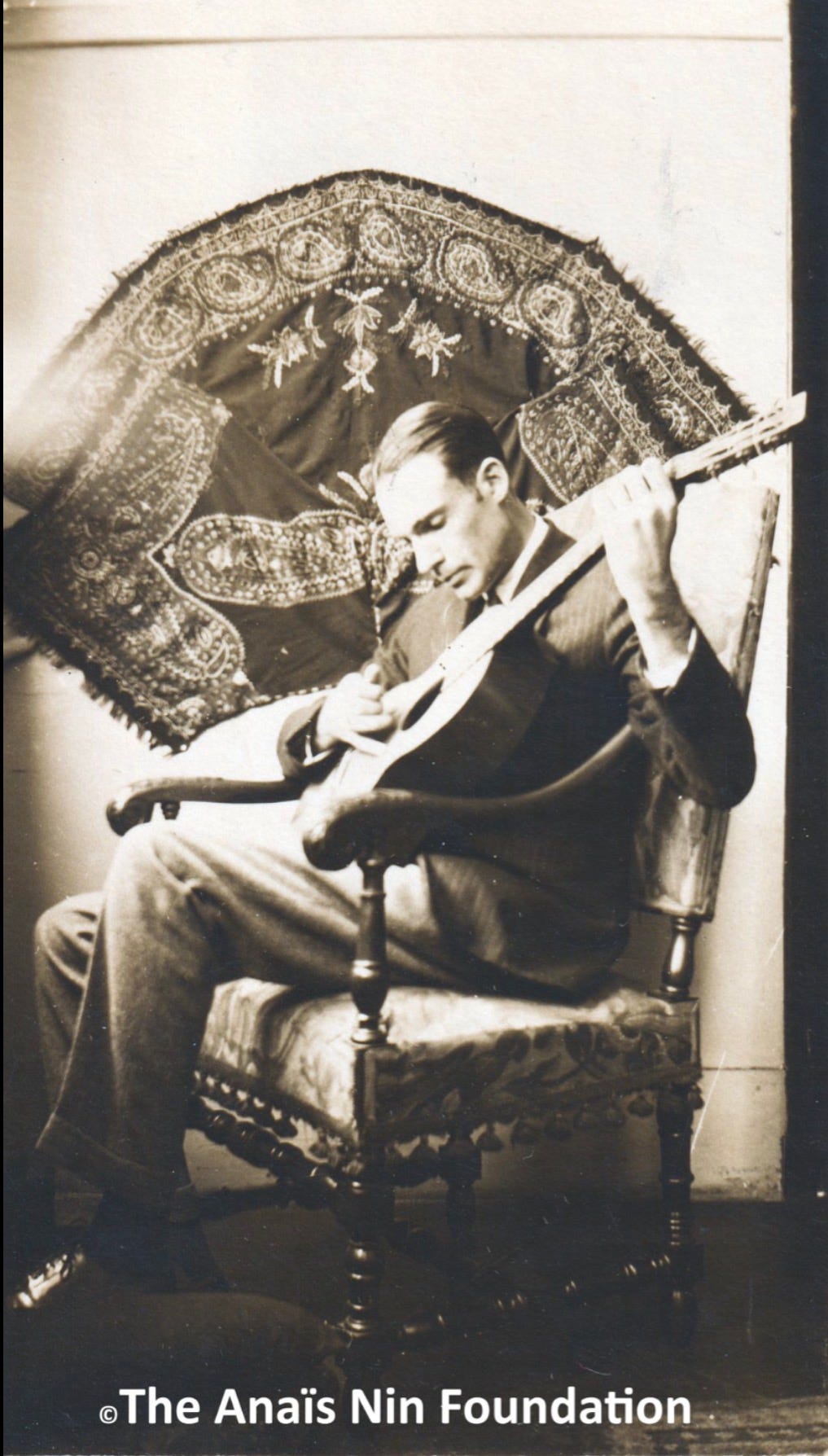
Rising alongside the waking city and shielding herself within the protective aura of her cape, we observe a Sabina exhausted by the secrets of her midnight hour, solemnly returning to her loyal and awaiting safety net, Alan.
Alan exists as the one fixed point in Sabina’s ever-spinning carousel of rendezvous. He acts as the unyielding and ever-devoted anchor of her life, a quality that distinguishes him from her other lovers. To Sabina his very presence is a source of benediction. His kindness and tolerance of her free spirit elicits feelings of both shame and protection.
“He appeared as a fixed point in space. A calm face. A calm bearing…He held the only fixed position in the fluctuations of her feelings.”
Alan’s love for Sabina can be read as fatherly, she is his “little One.” Whether or not he suspects the truth behind her extended absences remains uncertain. Sabina lies to him that she has been travelling to perform the role of Madame Bovary for a play, ironically, a character from Gustave Flaubert’s tragic novel who seeks escape from the boredom of marriage through adulterous affairs.
“Why am I loved by him? Will he continue to love me? His love is for something I am not. I am not beautiful enough, I am not good, I am not good for him, he should not love me, I do not deserve it, shame shame shame.”
A Brief History
It's all too easy to map the character of Alan onto Nin’s real husband, Hugh Guiler, but we should always remember that Spy is fiction, Nin’s blending of fantasy and reality on the page. The relationship between Nin and Guiler, which spanned Nin’s entire adult life, was complex, constantly shifting, and Nin herself struggled to articulate what it was. Whatever “it” was, it formed a crucial part of her identity. In October 1943, when things were going well between them, she wrote:
“I focused on Hugo, who changes and always becomes what I want… With Hugo there is gaiety. With Hugo I never feel the loneliness I did with Henry and Gonzalo. There is a sense of nearness which no passion can create. The loneliness is lessened now that I have fewer secrets from Hugo, and he feels my return. It gives him a sense of power. He has been divinely patient because he dreams my dreams with me, forgets himself in his love, and now he is compensated “ (Mirages, pp203-204)
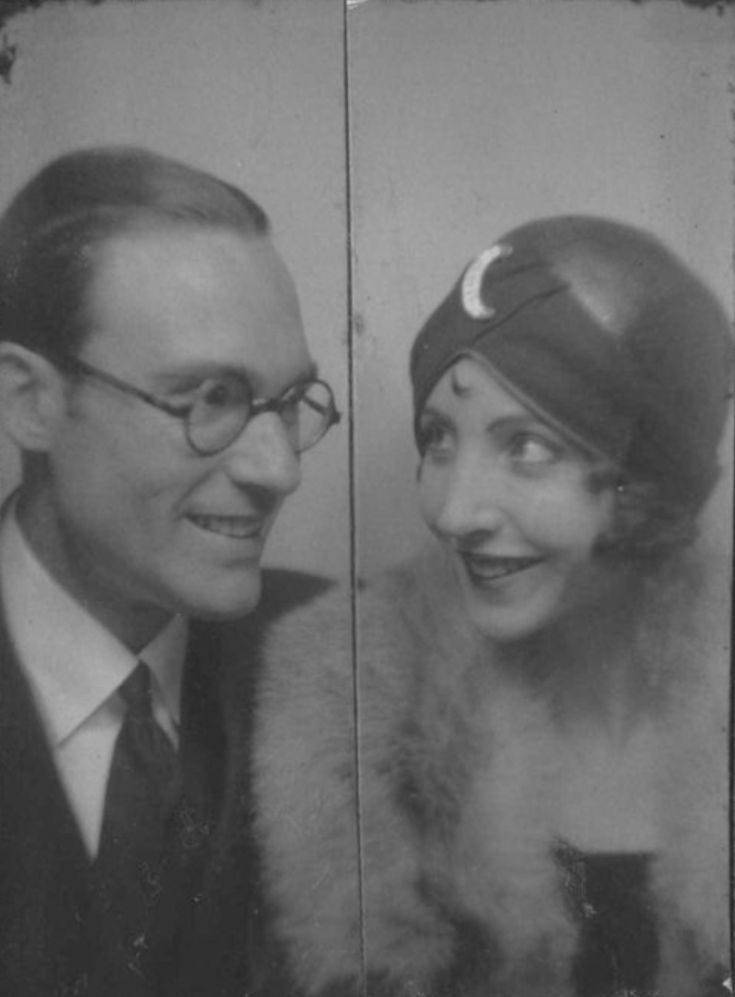
This all sounds very Alan. However, things weren’t always so harmonious between them. The word “compensated” does a lot of work here.
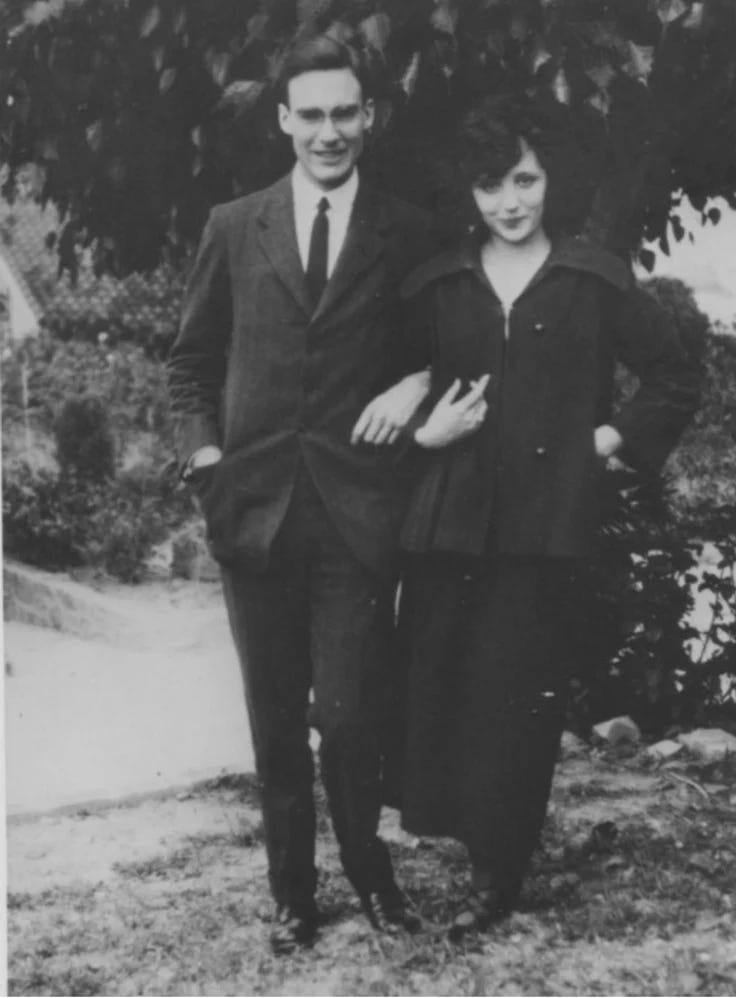
Guiler was a successful banker and it was his career that helped fund Nin’s artistic endeavors, and even some of her lovers such as Henry Miller. Guiler mostly turned a blind eye to Nin’s various affairs but he wasn’t entirely naïve. When Nin married another man in a shocking act of bigamy, Guiler then finally grew tired of her absences. In Kim Krizan’s biography Spy In The House Of Anais Nin she includes a letter from Guiler addressed to Nin, in which he finally puts his foot down:
“There is no use coming back to New York until I work this thing further out with myself. I believe now the truth is, and there is no use concealing it from each other under a lot of words, that I have been angry at a whole accumulation of things in our relationship, and you have been too. We admire each other, we have pity for each other but in our actual actions and attitudes towards each other we have both shown that for the time being at least anger is stronger than the other emotions.”
The two eventually worked through their differences remaining together until Nin’s death, Guiller allowed her to continue spending her time between the two coasts, accepting that although he would never be the only man in her life, he held an exceptionally special part in her heart. It was his material abundance and unconditional love that made Nin’s literary work possible and paved the way for her later success.
Alan
Alan the devoted husband, guardian, and surrogate father encloses Sabina into the safety of his arms. As she lays there in a near-constant state of anxiety, an anxiety fueled by shame, she begins wishing for a certain kind of arrangement between them, a concept that her era doesn’t quite have the language for.
“She wished she could tell him what had actually happened; she wished she could rest her head upon his shoulder as upon a protective force, a protective understanding not concerned with possession of her but a complete knowledge of her which would include absolution. Wishing he might judge her acts with the same detachment and wisdom he applied to other’s acts, wishing he might absolve her as he absolved strangers from a knowledge of their motivations.”
Her longing is for something that could be described as an open marriage, a concept that Gen Z now has the language for.
Sabina’s need for adventure and independence contradict with the stifling cage of being a housewife. But given the time-period in which she exists she needs what Alan can offer, material success (remember women couldn’t even open their own bank accounts until the 1970’s) and we can also argue she needs his emotional support and gentle care to return to after the lustful hunger and ferocious passion of her lovers.
At the same time, readers may feel sorry for Alan, Sabina paints him as a guardian angel, we may find ourselves questioning similarly to Sabina:
“I can’t understand what impels me to leave this, this is happiness.”
Sabina is of a mutable nature and perhaps it is this inner mutability that compels her to stray from Alan. Her confidence in his devotion gives her the freedom to explore sexuality on her own terms, outside their relationship. Alan was exceptionally modern for his time, just as Sabina was. They complement each other well, creating a dynamic of trust, love, and most importantly freedom to leave. Alan’s gravity always pulls Sabina back to the center, no matter how far she strays on her emotional adventures.
Over to you, Dear Reader.
What are your thoughts?
Alan is the dependable husband, but he must have his own imagination — his own fantasies fed by her absences and the stories she tells on her return. Who is he, really?
Why and how does he love Sabina? Does he know about her other relationships?
Is theirs an open relationship — of equals, or of domination and submission?
Alan is the only man who gets the full Sabina — the returning version, the storytelling version. Is that more or less intimate than what the others get?
What does it mean that she lies to the one person she always comes home to?
What does Alan offer her — emotionally, materially — and why is it important? Could Sabina survive without him?
Feel free to respond to these questions directly in the comments, and share any additional thoughts or insights you’d like to contribute to the discussion.
Until next week...
Really enjoyed the line you called out that Alan was “not concerned with possession of her but a complete knowledge of her”
I don’t think she grants Alan that same non-possessive love, she is riddled with “anxiety from shame” and self loathing, she cannot tolerate the thought of Alan’s extramarital affairs.
I have to think Alan either knows the truth of Sabina’s prolonged absences or is very simple. She’s gone for “rehearsals” and he doesn’t attend the production?
I don't really have a strong opinion on Sabina's husband yet. Sabina is constantly thinking about him and comparing him to others, and we've seen some of his behavior, but I still can't tell whether he's actually suspicious of her affairs.
Some things seem pretty obvious from the reader's perspective. For example, he paid for her hotel without realizing she was still in town, which makes me wonder if he might have seen a receipt or noticed something that didn't add up. If he is aware and choosing to look the other way, maybe he genuinely loves her and understands why she's suddenly rebelling. Or maybe he's involved in something similar himself. It's hard to tell whether he'd react with shame, anxiety, or indifference.
After reading Nin's brief history, I'm wondering if that's actually the point, that he knows more than he lets on and is tolerating it for now. Then later in the book, we might finally see the consequences when he either confronts her or reaches his limit.